
Where Bright Ideas
Come to Life!
Come to Life!
An RCD (residual current device) is the part of your consumer unit that switches the power off automatically if current is leaking somewhere it shouldn't — through you, through a damaged cable, or through a faulty appliance. It's the single biggest reason electric shocks in modern homes rarely turn fatal.

An RCD constantly compares the current going out on the live wire against the current coming back on neutral. In a healthy circuit those two numbers match. If they don't — because some current is escaping to earth, say through your body — the RCD trips in a fraction of a second, well before a shock becomes dangerous. Cut through a cable with the lawnmower and touch a live wire, and this is what saves you.
A fuse or MCB protects the wiring and the property — it trips on overload or short circuit, when too much current is flowing. An RCD protects people — it trips on imbalance, even at very low currents that wouldn't bother a fuse at all but would kill you. You need both. Most modern consumer units combine the two into RCBOs, giving you overload and shock protection on a single circuit rather than a shared RCD covering several.
Usually one of three things: a genuine earth fault (damaged cable, water ingress, a failing appliance), a faulty appliance drawing current to earth, or — less dangerously — a build-up of natural leakage across several appliances on one circuit that tips the device over its threshold. If yours trips occasionally with no obvious cause, see our guide on what to do when an RCD trips. If it won't stay reset, that's a fault to call us about, not something to keep resetting.
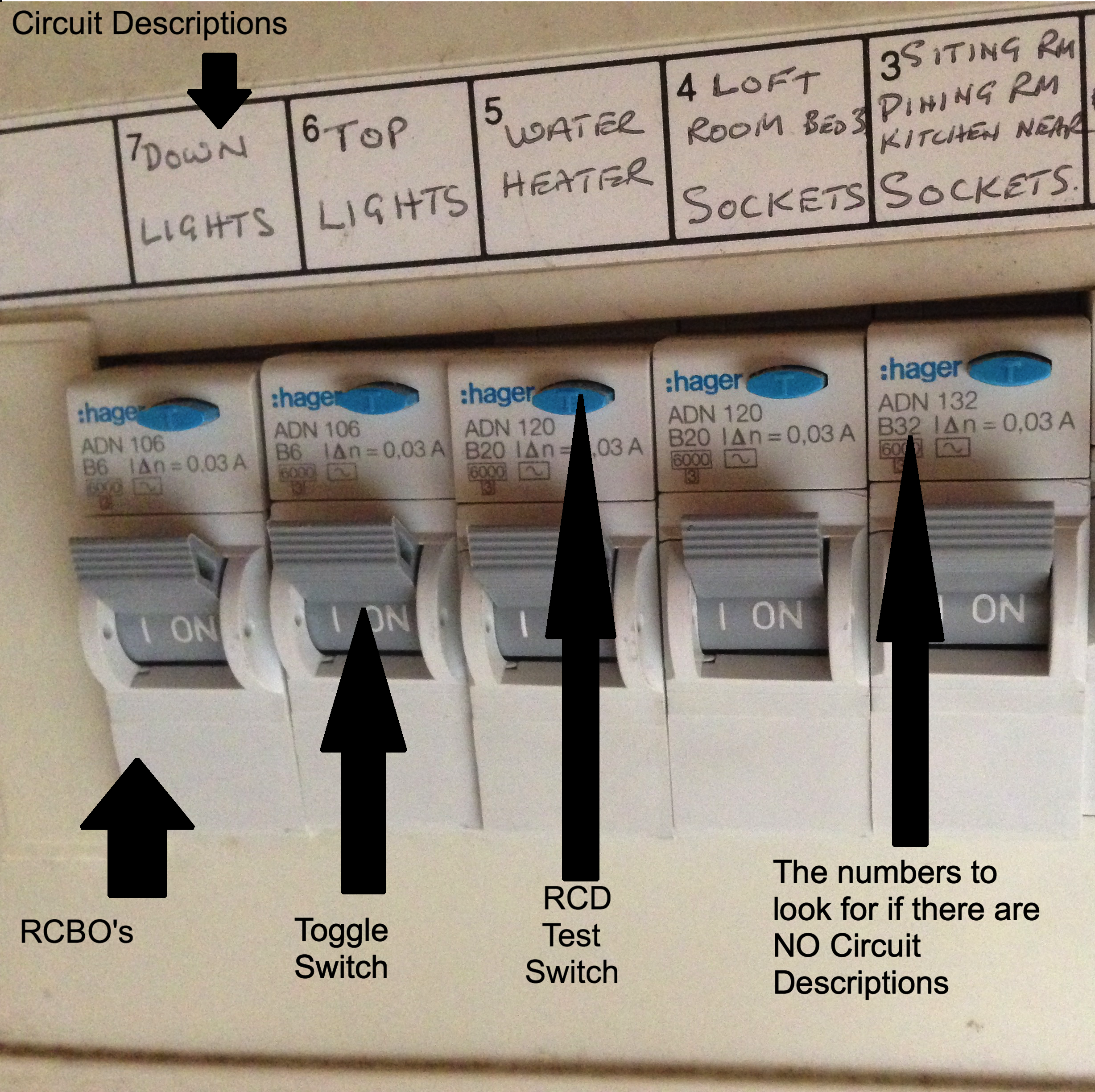
BS 7671 requires 30mA RCD protection on most circuits in domestic and commercial installations — sockets, cables buried in walls, bathroom circuits, outdoor circuits. If your consumer unit predates this (common in anything installed before the early 2000s, and plenty installed after), you may have no RCD protection at all, or only partial. This is one of the most common findings we flag on an EICR, and it's a straightforward fix during a consumer unit upgrade.

Not all RCDs handle modern electrical loads the same way. Type AC only copes with straightforward AC faults; Type A is now the minimum standard for new work because most homes run electronics that can introduce a DC component; Type B is required for EV charging. We've covered this in more depth in our Type AC RCD regulations article if you want the full detail.
RCD protection is checked as standard on every EICR we carry out, whether it's a rental property, a care home with a maintenance team, or a commercial unit. Missing or inadequate RCD protection is one of the more common C2 findings we report — it's a safety issue, not a paperwork one, and it's usually resolved same-visit or on a quick return.
Under current regulations, most do — sockets, buried cables, anything outdoors or in a bathroom. A handful of fixed circuits can be exempt depending on installation method. An EICR will tell you exactly where you stand.
Rarely truly "no reason" — it's usually a genuine (if minor) leakage building up across appliances, or an ageing device becoming oversensitive. Repeated tripping is worth investigating rather than ignoring.
Press the test button on the front, usually marked T or with a "push to test" label. It should trip immediately. If it doesn't, that's a call-out, not a DIY fix.

No. An RCD protects against earth faults only and often covers several circuits. An RCBO combines RCD and MCB protection on a single circuit, giving overload and shock protection together.
We check this on every EICR we carry out across Tonbridge, Tunbridge Wells, Sevenoaks and Crowborough. Get in touch for a quote or call us on 01892 531728 — we're happy to talk you through what you need before you commit to anything.
Prompt courteous service, with very competitive rates. I have no reservations to recommend this Company.
Thank you for attending my “Emergency Call out” there was smoke coming out of my socket. I telephoned at least 15 electricians after 7:15pm (in the evening) when we discovered the smoke coming out of the Socket. Their phones not even being answered. The next on my list was Bright Sparks, who were the only ones to answer the call - literally within a couple of rings, and was answered by a lovely lady who reassured me that help would be on the way. The Call was sent to your emergency electrician who called back within 15 minutes, and was able to attend within the hour, and fix the problem. Thank you. Excellent Service
Karen and her team of "Bright Sparks" are wonderful to deal with and needless to say know their negatives from their positives with just a dash of earth . I would recommend their services to anybody.
Thanks for Louise's great work - very happy!
I would highly recommend Karen and her team for any electrical jobs you have. From the moment I first emailed my enquiry the service was super quick (I appreciate this depends on their other jobs at the time). We received a quote that was clear with the works to be done and price was reasonable. On the day the electrician (Joe I believe) turned up on time, did a fab job and even tidied up after himself. The old ceiling lights we had were a little tricky to get off and pulled some of the plaster off too, but he filled it in and made it as good as new.Great job from beginning to end. Thank you Bright Spark