

Where Bright Ideas
Come to Life!
Come to Life!
Up and down lights are one of the jobs I get asked about most once the clocks go back. People want their front elevation to look as good after dark as it does in daylight, and they want to see who's coming up the path before the doorbell goes. Done properly, up and down lights do both. Done badly, you end up with a fitting that's corroded through within a couple of winters, or a cable run tacked to the outside wall that shouldn't be anywhere near the weather. Here's what I actually tell customers across Tonbridge, Tunbridge Wells, Sevenoaks and Crowborough before I quote the job.

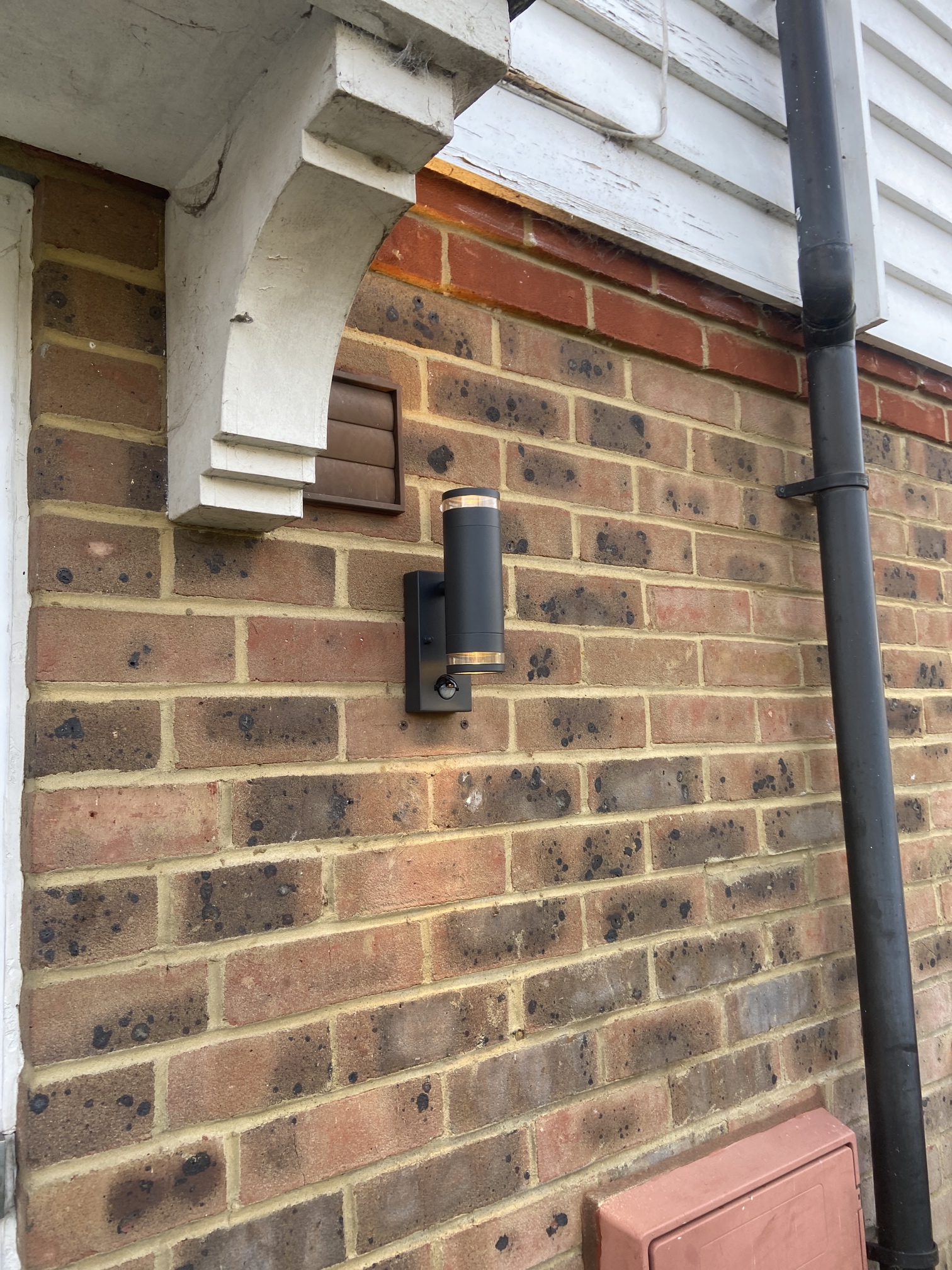
An up and downlight is a wall-mounted fitting that throws a narrow beam both above and below the fixing point, washing light up and down the wall rather than out across the garden. That's the key difference from a floodlight or a garden spotlight — it's about showing off the wall itself, the brickwork, render or stone, rather than lighting an area to work or walk in.
The reasons people fit them come down to three things. Kerb appeal — a lit facade looks considered, especially either side of a front door or either side of a garage. Security — a well-lit entrance and boundary is a genuine deterrent, and it means you're not fumbling for keys in the dark. And running cost — a modern LED up and downlight draws next to nothing left on a dusk-to-dawn photocell, so it's a low-maintenance way to get both.
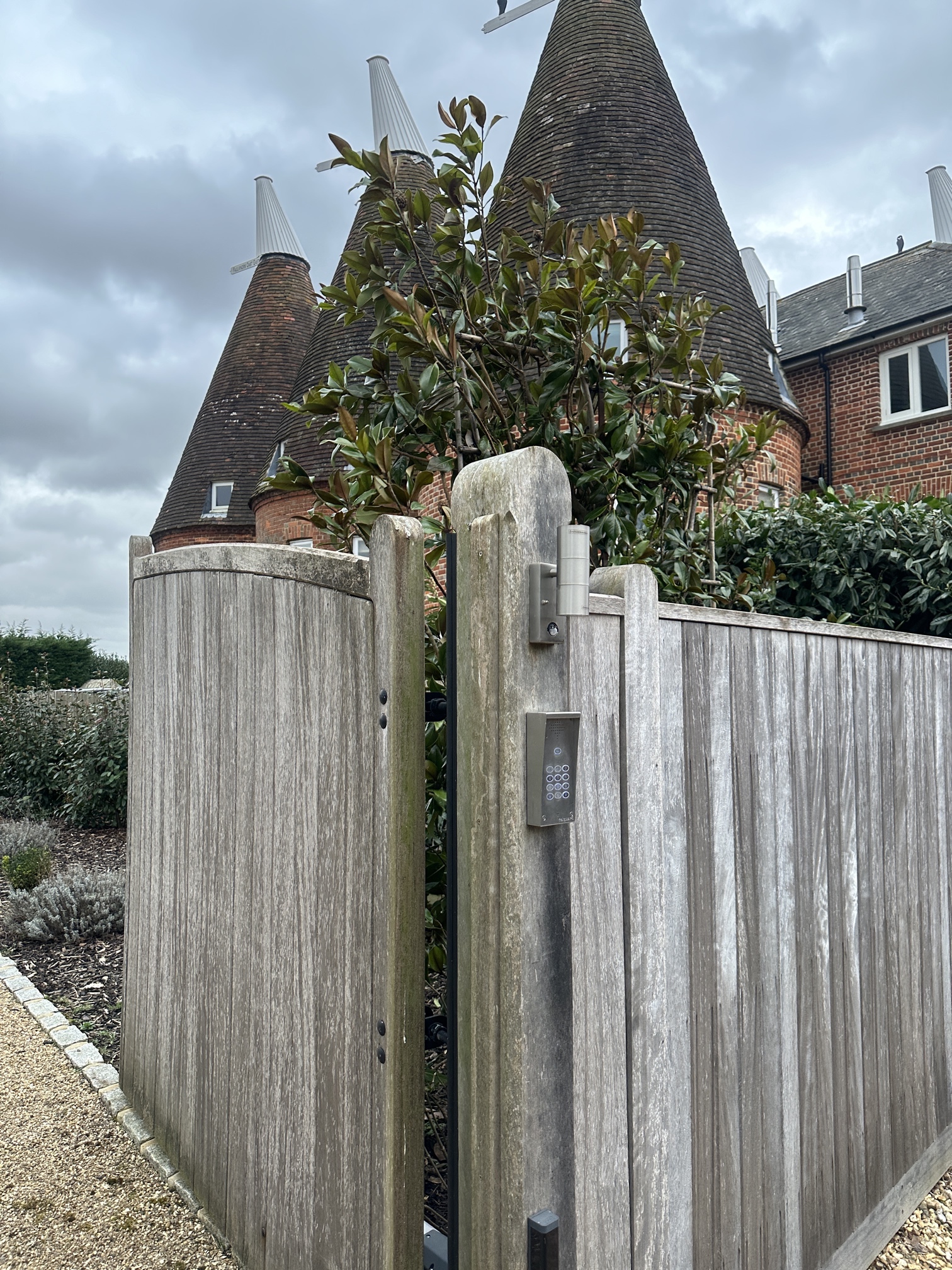
The three spots I fit most often are either side of the front door, either side of a garage door, and on gate posts or pillars at the entrance to the driveway. On a longer boundary wall, a run of fittings at even spacing along the top of a low wall does a similar job to marking out the edge of the plot after dark.
Where there's a garage involved, I'll usually route the cable from inside the garage through the wall, rather than running it externally and clipping it down the brickwork. It's a cleaner finish and it keeps the cable protected from the weather and from anyone deciding to have a go at it.

Sometimes, yes. If there's already an external light on that wall and the circuit has spare capacity, I can often extend from that point using outdoor-rated black cable and fire-rated clips, rather than running a whole new circuit back to the consumer unit. It keeps the cost down and avoids unnecessary disruption.
What I won't do is tap into an existing supply without checking it first. I always want to know what's actually protecting that circuit, what condition the existing wiring is in, and whether the consumer unit has the RCD protection it needs before I add load to it. On an older installation, that check sometimes turns into a bigger conversation — and it's a five-minute check that's worth having before any new lights go in, not after.
This is the bit that gets skipped when people buy fittings online and ask me to just fit them. As a minimum I'm looking for IP44 on a sheltered wall under an eave. Anywhere genuinely exposed to driving rain, or near a patio that gets hosed down, I want IP65 or better. The first digit covers protection against dust and solid objects, the second against water — it's the seal that matters, not the finish.
On finish, stainless steel and black powder-coated fittings both perform fine outdoors as long as the IP rating and seal are right — the finish is about matching your door furniture and window frames, not about weatherproofing. A cheap fitting with the correct IP rating will outlast an expensive one without it.
Yes. Any circuit feeding an outdoor fitting needs additional protection from a 30mA RCD under BS 7671, and I'll always confirm that's actually in place — whether that's a dedicated RCBO way in the consumer unit or an RCD protecting a group of circuits — before I sign the job off. If your board's older and doesn't have that protection, it's usually a small, contained piece of work to sort alongside the lighting rather than a reason to put the job off.
Some up and downlights come with an integrated PIR sensor. I tend to steer people towards a separate, independently placed detector instead — you get to aim it precisely at the path or driveway rather than wherever the light happens to be mounted, and if the sensor plays up you're not replacing the whole fitting to fix it.
If security lighting rather than architectural lighting is really what you're after, it's worth reading my separate guide on
LED flood lights and motion detectors — a wider beam, brighter output, built for security rather than kerb appeal. If you're off-grid or the run back to a consumer unit is impractical, I've also covered solar-powered motion detector lighting as an option.

The main variables are the number of fittings, whether I can extend an existing circuit or need to run a new one back to the consumer unit, and how far the cable run has to travel — particularly if it needs to cross a driveway or go underground, which usually means SWA cable rather than surface-clipped T&E. Get in touch with a photo of the wall and roughly how many fittings you're picturing, and I'll give you a proper price rather than a guess.
No, not for a standard domestic installation on your own property. If your home is listed or in a conservation area, check with your local planning office first, as some restrict changes to the external elevation.
Adding a new outdoor circuit, or extending an existing one, is notifiable work under Part P of the Building Regulations. A NICEIC-registered electrician can self-certify the work and issue the correct certification, which you'll need if you come to sell the property.
There's no fixed number — it comes down to the width and features of your elevation. As a rule of thumb, a pair either side of the front door and a pair either side of the garage or a gate pillar defines the space without overdoing it.
Far less than older halogen or cool-white fittings. A warm white LED around 3000K attracts noticeably fewer insects than a cool white or higher-UV light source, so it's worth specifying warm white for anything near a door or window.
Up and down lights are a low, constant wash of light designed to highlight the architecture of your home. Floodlights throw a much wider, brighter beam and are usually paired with a PIR motion detector for security rather than aesthetics. Many homes use both.
A good quality fitting is typically rated for 20,000-50,000 hours. In practice it's usually the driver rather than the LED itself that fails first, especially on cheaper fittings, so it's worth paying a bit more for a reputable brand and a proper IP-rated seal.

Please also see some of other related Articles:
Enhancing Home Security with LED Flood Lights and Motion Detectors
Solar Powered Motion Detector Lighting
Creating Lighting Effects with Down Lights
If you'd like up and down lighting fitted around your home in Tonbridge, Tunbridge Wells, Sevenoaks or Crowborough, book a free visual survey and quotation with a NICEIC-registered Bright Spark electrician.
Telephone: 01892 531728 · Email: karen@brightsparkelectrician.co.uk

I needed a job done really 'sooner rather than later' and at a weekend too! Karen came out, assessed what needed to be done and set to work straight away. Job done, cleared up and on her way within the hour! Not often you get that service! Certainly will keep her number on my mobile and recommend to anyone who needs an electrical job done!
Terry was very helpful, and everything has been fixed.
…. just to say how pleased I have been with the service we have received from Bright Sparks. I have arranged many quotes for work to the property over the past 3 years and your company has consistently returned my calls and emails in a timely way which is much appreciated. You have provided knowledgeable, friendly advice about the work that needed to be done and offered well priced quotes. The work has been completed quickly to a high standard. I'd definitely recommend you to others. Thank you.
Karen was amazing I can not recommend her highly enough she went over and above my expectations and was indeed a bright spark to my day and helped with love ❤
I have used Bright Sparks for two jobs and have been delighted with the quality of the work carried out. Karen is very knowledgeable in her subject and her staff are very well trained , courteous and hard working. I would highly recommend the company without hesitation.